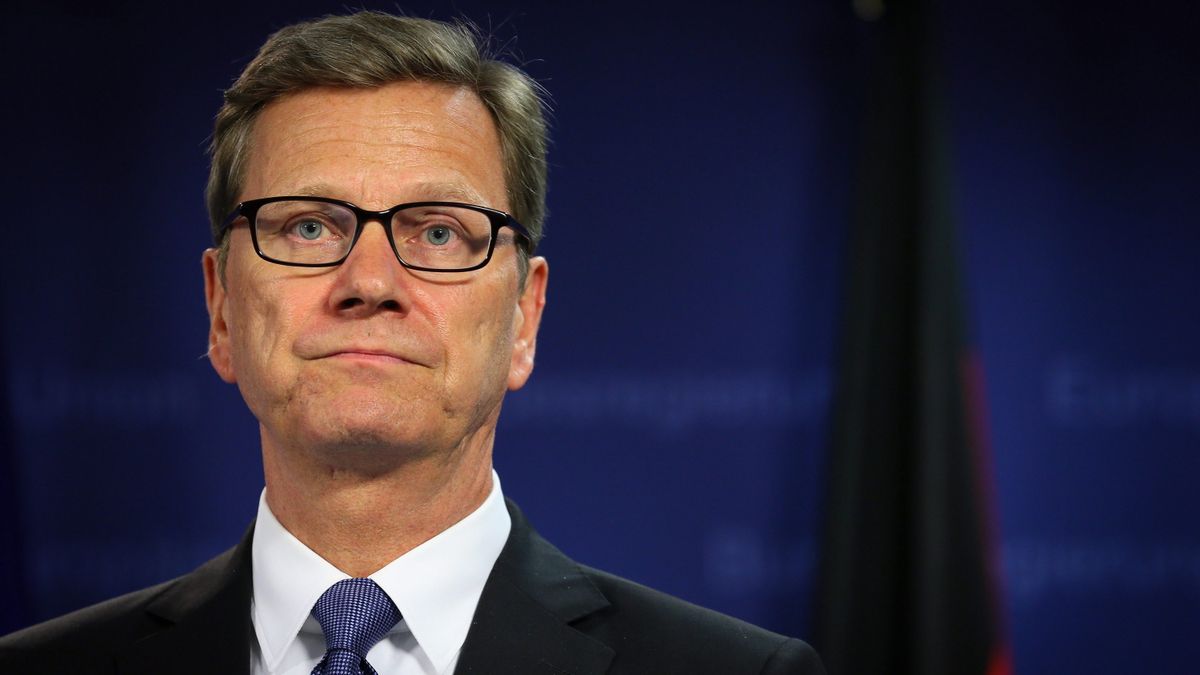
The news reverberated across Germany and beyond, casting a somber shadow over a nation that had followed his battle with hope and trepidation. Guido Westerwelle, a former German Foreign Minister and a titan of liberal politics, tragically succumbed to leukemia at the age of 54. His passing on a Friday afternoon at the University Hospital in Cologne marked the end of a fierce, two-year fight against a particularly aggressive form of blood cancer, leaving a void in German public life and a deep sense of loss among colleagues and citizens alike.
For many, the question that sadly garnered a definitive answer on that fateful Friday was, "Ist Guido Westerwelle tot?" The confirmation, delivered by the foundation he established, was met with profound shock and grief, underscoring the enduring impact of a man who, despite his relatively young age, had shaped Germany's political landscape for decades.
The Legacy of a Political Titan: From Opposition to Foreign Minister
Guido Westerwelle was more than just a politician; he was a defining figure in German politics across an entire generation. His career spanned from the early days in Bonn to the corridors of power in Berlin. As the charismatic leader of the Free Democratic Party (FDP), he navigated the party through various political fortunes, ultimately achieving its greatest success in decades.
He first rose to prominence within the FDP, known for his sharp wit, rhetorical prowess, and a modern, often unconventional approach to politics. After years in opposition, advocating for liberal principles and economic reform, Westerwelle engineered a historic comeback for the FDP in the 2009 federal election. This triumph led to the formation of a 'black-yellow' coalition government alongside Angela Merkel's Christian Democratic Union (CDU). In this government, he served as both Vice-Chancellor and, most notably, as Foreign Minister.
His tenure as Germany's top diplomat was marked by a commitment to multilateralism, human rights, and a strong European stance. He played a crucial role in shaping Germany's foreign policy during a period of global challenges, from the Arab Spring to the Eurozone crisis. His efforts helped solidify Germany's position on the international stage as a responsible and engaged partner. However, his political journey also saw its share of difficulties, including the FDP's eventual failure to re-enter the Bundestag in the 2013 election, a significant blow that led to his departure from active government service.
Beyond his political achievements, Westerwelle was also a trailblazer in his personal life. His marriage to sports manager Michael Mronz in September 2010 made him the first openly gay German Foreign Minister, a powerful symbol of progress and acceptance in a traditionally conservative political landscape. Their relationship, characterized by deep affection, was a source of strength and public inspiration. To delve deeper into his impactful career and personal journey, you can explore Guido Westerwelle: A Look Back at Germany's Key Political Figure.
A Battle Against a Relentless Foe: The Leukemia Diagnosis
The diagnosis of acute myeloid leukemia (AML) in June 2014 came as a shocking blow, not just to Westerwelle but to the entire nation. It was discovered under circumstances that underscored the unpredictable nature of such severe illnesses.
How the Diagnosis Unfolded
- Unexpected Discovery: Westerwelle had sustained a meniscus injury while jogging on Mallorca, leading to preparations for knee surgery.
- Routine Check-up, Life-Altering Results: During pre-operative blood tests, alarming abnormalities were detected.
- The Diagnosis: These anomalies quickly led to the diagnosis of acute myeloid leukemia, a particularly aggressive and severe form of blood cancer.
This turn of events highlights the critical importance of comprehensive medical check-ups, even for seemingly minor ailments or routine procedures. Sometimes, what appears to be a simple injury can lead to the discovery of a much more serious underlying condition. Westerwelle's case serves as a poignant reminder that vigilance regarding one's health and not dismissing unusual symptoms, however benign they might seem, can be life-saving. Early detection, while not always leading to a cure for aggressive cancers like AML, significantly improves the chances of successful treatment and management.
Following his diagnosis, Westerwelle made the difficult decision to largely withdraw from public life, dedicating his energy to fighting the illness. He underwent intensive treatments, including chemotherapy and stem cell transplantation, sharing insights into his struggle through his book, "Between Two Lives," which offered a raw and honest account of his battle and newfound perspective on life.
A Nation in Mourning: Tributes Pour In
The announcement of Guido Westerwelle's death on that Friday afternoon unleashed a wave of grief and consternation across Germany. The Westerwelle Foundation, which he founded after his political career, shared the news with a deeply moving message alongside a photo of Westerwelle and his husband, Michael Mronz: "Wir haben gekämpft. Wir hatten das Ziel vor Augen. Wir sind dankbar für eine unglaublich tolle gemeinsame Zeit. Die Liebe bleibt." (We fought. We had the goal in sight. We are grateful for an incredibly wonderful time together. Love remains.) This heartfelt tribute encapsulated the personal tragedy behind the public figure's passing.
Leaders from across the political spectrum immediately expressed their profound sadness and admiration for Westerwelle:
- Chancellor Angela Merkel (CDU): Reacting from Brussels during an EU summit, Merkel expressed her deep shock, stating, "His death deeply shakes me." She remembered Westerwelle as a "sensitive and thoughtful person," and a "reliable and loyal human being."
- President Joachim Gauck: Praised him as a "passionate democrat and European," highlighting his unwavering commitment to Germany and its place in the world.
- Foreign Minister Frank-Walter Steinmeier (SPD): Described his predecessor as the face of an "open-minded, liberal Germany firmly anchored in the international community." As a mark of respect, flags at the Foreign Office were lowered to half-mast.
- FDP Leader Christian Lindner: Emphasized the significant void Westerwelle's absence would leave, stating, "Guido Westerwelle will be greatly missed by all of us and certainly also by the debates in our country."
- Vice-Chancellor Sigmar Gabriel (SPD): Declared, "With Guido Westerwelle, an upright democrat has left us far too early."
The collective outpouring of grief transcended political affiliations, a testament to Westerwelle's ability to earn respect even from his adversaries. His death was a stark reminder of the fragility of life and the human cost behind public service. For more details on the national response, read Germany Mourns Guido Westerwelle: Leaders & Nation in Shock.
Beyond Politics: Westerwelle's Enduring Impact and Personal Strength
Even after stepping down from his ministerial roles, Guido Westerwelle continued to contribute to public life through the Westerwelle Foundation. Established in 2012, the foundation focuses on promoting democracy and economic development, particularly in developing and emerging countries. This work reflected his core liberal values and his belief in empowering individuals and fostering global cooperation, carrying forward his vision for a connected and prosperous world.
His openness about his battle with leukemia was another profound aspect of his later life. By sharing his personal struggle, Westerwelle brought much-needed attention to cancer awareness and the challenges faced by those battling severe illnesses. His candidness offered solidarity and inspiration to countless others facing similar health crises, demonstrating immense personal strength and resilience in the face of adversity. He became an unwitting advocate for courage and hope, showing that even public figures are not immune to profound personal struggles.
The enduring image of Guido Westerwelle will forever be linked to his sharp intellect, his political acumen, and his unwavering commitment to liberal ideals. But also, crucially, to his humanity, his fight, and the love that surrounded him. His life, though cut tragically short, left an indelible mark on Germany and the international stage, challenging norms and championing progress.
Guido Westerwelle's death at 54 is a profound loss for Germany. His career, spanning leadership of the FDP to serving as Foreign Minister, marked him as a key figure in modern German history. His battle with leukemia, fought with characteristic determination and public openness, resonated deeply, highlighting his courage both in politics and in his personal life. The outpouring of tributes from across the political spectrum underscored his widespread respect and influence. As we reflect on his legacy, we remember not only a skilled politician and diplomat but also a compassionate individual who left an enduring mark on his country and inspired many through his resilience and unwavering spirit.