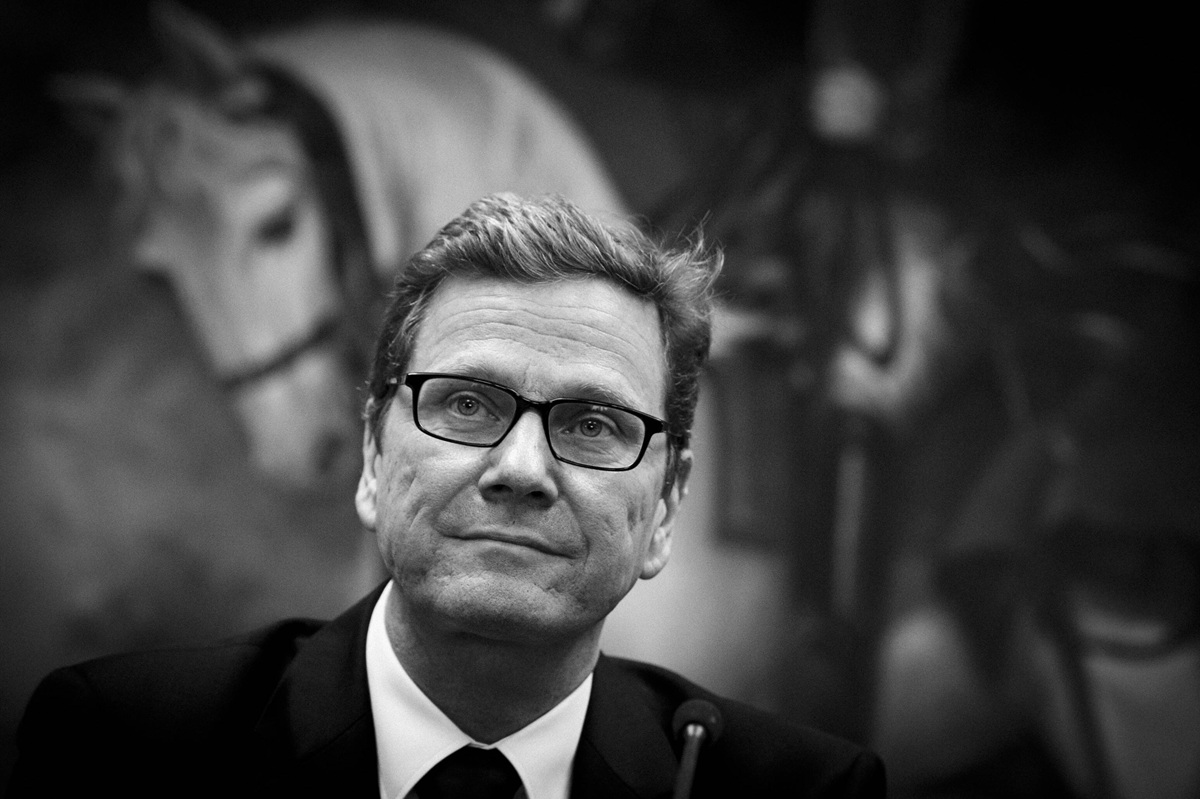
Germany Mourns Guido Westerwelle: Leaders & Nation in Shock
The news that reverberated across Germany and beyond on a somber Friday afternoon left countless individuals grappling with disbelief and profound sadness. Ist Guido Westerwelle tot? This heartbreaking question was confirmed with the announcement of the passing of Guido Westerwelle, Germany's former Foreign Minister and long-time leader of the Free Democratic Party (FDP). He was only 54 years old. Westerwelle, a political figure who shaped German discourse for a generation, succumbed to the severe complications of his battle with acute myeloid leukemia (AML) at the University Hospital in Cologne. His untimely death has plunged the nation into mourning, elicning heartfelt tributes from political allies and adversaries alike, underscoring the indelible mark he left on the country's landscape.
The announcement came from the Westerwelle Foundation, the organization he established after stepping down from his ministerial post. It was accompanied by a poignant image of Westerwelle alongside his husband, Michael Mronz, and a message that captured the essence of their shared struggle and enduring love: "We fought. We had the goal in sight. We are grateful for an incredibly wonderful time together. Love remains." This personal and powerful declaration resonated deeply, highlighting the human aspect of a man who served on the highest political stages.
A Life Cut Short: The Battle Against Leukemia
The journey to his final days was marked by a valiant, two-year fight against a particularly aggressive form of blood cancer. The diagnosis of acute myeloid leukemia (AML) in June 2014 was a cruel twist of fate, coming just six months after his departure from the Foreign Office. It was discovered entirely by chance during routine pre-operative examinations for a meniscus injury he sustained while jogging on Mallorca. The suddenness and severity of the diagnosis forced Westerwelle to largely withdraw from public life, channeling his characteristic determination into a deeply personal battle for survival.
Acute myeloid leukemia (AML) is a complex and often rapidly progressing cancer of the blood and bone marrow. It affects the myeloid cells, which are responsible for producing white blood cells, red blood cells, and platelets. In AML, these myeloid cells develop abnormally and fail to mature, leading to an overproduction of non-functional cells that crowd out healthy blood cells. This can result in severe infections, anemia, and bleeding problems. The fight against AML often involves intensive chemotherapy and, in some cases, stem cell transplantation, a grueling regimen that demands immense physical and mental resilience. Guido Westerwelle faced these challenges head-on, embodying a spirit of courage that inspired many beyond the political sphere. His public struggle also helped raise awareness about the disease, reminding us of the fragility of life and the importance of early diagnosis and ongoing research.
For more detailed information on his passing, you can refer to: Guido Westerwelle Dead at 54: Ex-Minister Succumbs to Leukemia.
A Titan of German Politics: From Opposition to Foreign Minister
Guido Westerwelle's political career spanned over three decades, making him a truly defining figure in post-reunification Germany. From his early days in Bonn to the bustling political hub of Berlin, he was a driving force within the Free Democratic Party. He rose through the ranks to become the FDP's leader, a position he held with characteristic vigor and ambition. After years in opposition, he orchestrated the FDP's return to governmental power in 2009. This landmark achievement saw him take on the dual roles of Vice-Chancellor and Foreign Minister in Chancellor Angela Merkel's CDU/FDP coalition government. His tenure as Germany's chief diplomat was marked by a commitment to a weltoffenen, liberalen Deutschlands (an open-minded, liberal Germany) firmly anchored in the international community.
Westerwelle's political style was often direct and sometimes provocative, but always driven by a profound belief in liberal values. As Foreign Minister, he navigated complex international crises, championed human rights, and advocated for multilateralism. He was known for his dedication to European integration and his efforts to strengthen Germany's role on the global stage. A significant aspect of his public persona, though often secondary to his political achievements, was his pioneering role as an openly gay politician. His marriage to Michael Mronz in 2010 was a milestone, symbolizing progress and acceptance within German society and politics. His ability to overcome adversity and break barriers, both politically and personally, solidified his place as a truly unique and influential personality.
A Nation United in Grief: Tributes Pour In
The news of Guido Westerwelle's passing triggered an outpouring of grief and shock across the political spectrum and throughout German society. Leaders from all major parties, transcending typical political divides, offered heartfelt condolences and celebrated his contributions to the nation. This collective mourning highlighted the respect and admiration he commanded, even among those with differing ideologies.
- Chancellor Angela Merkel (CDU): Visibly shaken, Merkel expressed her profound sadness from a European Union summit in Brussels. She described his death at 54 as "truly difficult to accept" and remembered him as "a sensitive and thoughtful person, reliable and loyal." Her words underscored the deep personal and professional bond they shared during their time in government.
- President Joachim Gauck: The Federal President honored Westerwelle as a "passionate democrat and European," recognizing his unwavering commitment to democratic principles and the European project.
- Foreign Minister Frank-Walter Steinmeier (SPD): Westerwelle's successor at the Foreign Office praised him as the "face of a cosmopolitan, liberal Germany that is firmly anchored in the international community." As a mark of respect and national mourning, flags at the Foreign Office were lowered to half-mast, a solemn gesture signifying the loss of a prominent figure.
- FDP Leader Christian Lindner: The current head of the FDP acknowledged the significant void Westerwelle leaves, stating, "Guido Westerwelle will be greatly missed by all of us and certainly also in the debates in our country."
- SPD Chairman and Vice-Chancellor Sigmar Gabriel: Gabriel also paid tribute, declaring, "With Guido Westerwelle, an upright democrat has left us far too early."
These tributes, from the highest offices of the German state, reflect not just a political colleague but a man who earned respect for his conviction, his intellect, and his unwavering dedication to public service. His death served as a moment for Germany to pause and remember a statesman who, despite the often contentious nature of politics, ultimately stood for unity and progress.
The Personal Side: Love and Resilience
While Guido Westerwelle's public life was consumed by politics, his personal journey, particularly his relationship with Michael Mronz, provided a powerful testament to love and resilience. Their marriage in September 2010 was a significant moment, symbolizing not just personal happiness but also a stride forward for LGBTQ+ rights in Germany. During his intense battle with leukemia, Mronz stood steadfastly by his side, providing unwavering support and companionship. The heartfelt message shared by the Westerwelle Foundation upon his passing, "The love remains," spoke volumes about the depth of their bond and the strength they drew from each other during the most challenging times. It offered a glimpse into the private fortitude that underpinned his public persona, reminding everyone that behind every public figure is a human being facing life's ultimate tests.
Conclusion
The passing of Guido Westerwelle at the age of 54 leaves a profound void in German politics and society. His life was one of relentless ambition, intellectual rigor, and unwavering commitment to liberal ideals. From leading the FDP back into government to serving as Germany's chief diplomat, he was a key architect of his nation's trajectory. Beyond his political achievements, his courage in facing a brutal illness and his pioneering role as an openly gay politician will long be remembered. As Germany mourns, the tributes from across the political spectrum underscore the legacy of a statesman who dedicated his life to public service, leaving an enduring mark on the hearts and minds of many. His story is a poignant reminder of the fragility of life, the strength of human spirit, and the lasting impact one individual can have on a nation.